
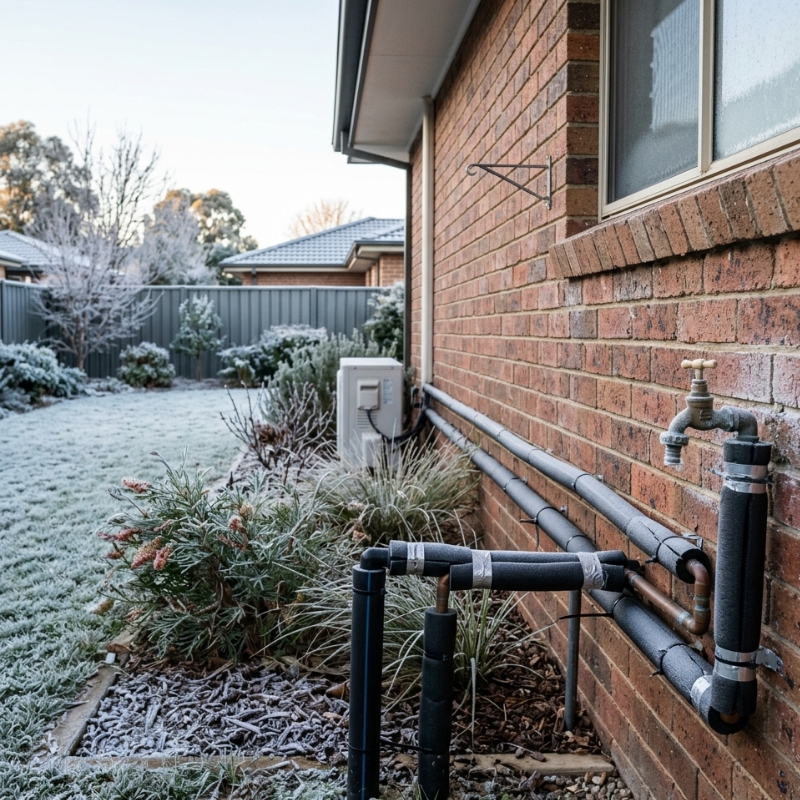
Canberra’s overnight lows regularly dip below zero, and that sudden freeze–thaw cycle can be brutal on plumbing. A little pre-winter maintenance now can save you from dripping ceilings, burst pipes, and ice-cold showers when you least expect them. The steps below are designed for homeowners who want to tackle the basics themselves before calling a local Canberra plumber for anything more complex.
1. Understand How Canberra’s Climate Affects Your Plumbing
Canberra’s inland climate lacks the coastal moderating effect many Australian cities enjoy. Overnight temperatures can hover around –6 °C in the suburbs, which is cold enough for standing water in external pipes to freeze. According to the Bureau of Meteorology climate data for Canberra, the average minimum sits near or below 0 °C for much of June, July, and August. Water expands by roughly nine per cent when it turns to ice, so any trapped moisture in exposed copper or poly pipe places stress on joints and fittings. Even if a pipe doesn’t split immediately, tiny cracks can appear and later turn into full-blown bursts when pressure resumes.
Why freezing matters for ACT homes
• Canberra’s clay soils shift as they dry and re-hydrate, already placing extra stress on underground pipework.
• Older suburbs often still run original copper mains with minimal external lagging.
• Hot-water units installed outdoors can struggle to maintain temperature overnight, leading to lukewarm morning showers and higher energy use.
2. The Essential 10-Point Winter Plumbing Checklist
Below is a practical, homeowner-friendly list you can work through over a weekend. Tick off each item before the first frost settles in.
| Checkpoint | What You’re Looking For | Suggested Action |
| 1. Exposed outdoor taps | Signs of corrosion, previous leak marks | Fit foam tap covers or insulating socks |
| 2. Visible external pipework | Bare copper or plastic in wind-exposed areas | Wrap with UV-rated pipe lagging and secure with cable ties |
| 3. Hot-water system age & location | Units older than 10 years, located outside without shelter | Consider adding a weatherproof enclosure or discuss upgrade options |
| 4. Relief valves on hot-water units | Drips or continuous discharge | Pull the TPR valve to flush, replace if leaking |
| 5. Garden irrigation lines | Thin polypipe left connected over winter | Drain lines, disconnect hoses, close isolation valve |
| 6. Gutters & downpipes | Blocked with autumn leaf litter | Clear debris to keep stormwater moving and relieve pressure on roof plumbing |
| 7. Heating-system condensate lines | Kinked or pooled lines from gas heaters | Ensure line falls correctly to drain and isn’t blocked |
| 8. Indoor pipe noises | Banging or water hammer as temperature changes | Add water-hammer arrestors or have pressure checked |
| 9. Water meter & mains isolation valve | Hard to turn or buried | Excavate gently, clean, exercise valve so it closes if an emergency occurs |
| 10. Emergency plan | Household members unsure how to shut water | Show each person the mains tap location and practice turning it off |
Completing these steps reduces the chance of waking to a burst hose bib or a hot-water unit that refuses to fire on Canberra’s chilliest mornings.
3. Why Pipe Insulation Beats Reactive Repairs
Insulating water lines might feel like an optional extra, yet it’s often the cheapest way to prevent freeze damage. Foam lagging sleeves cost only a few dollars per metre and can be fitted with basic tools.
Key benefits
• Keeps incoming water closer to ambient temperature, reducing the strain on hot-water units.
• Minimises overnight static in lines, so pipes are less likely to contract and create joint stress.
• Protects against UV, windchill, and minor physical impact in exposed areas.
Common mistakes to avoid
• Using indoor-only insulation that deteriorates in UV light.
• Failing to tape or cable-tie seams, allowing moisture to creep inside.
• Leaving small gaps at elbows or tees, creating cold spots where ice can start forming.
4. Checking Your Hot-Water System Before the Cold Hits
A hot-water unit that limped through summer can stop entirely once Canberra’s overnight lows arrive. Early checks can prevent that first-day-back-at-work cold shower.
Simple homeowner tests
- Temperature check – Run a bathroom tap first thing in the morning. If you need to let the water run for more than 30 seconds to get hot, heat loss or unit fatigue could be the culprit.
- Anode rod age – Storage-tank systems rely on a sacrificial anode; after five years, it is usually consumed. A plumber can replace it in under an hour.
- Valve inspection – The temperature-pressure relief valve should dribble briefly when lifted and then reseal. Continuous leaking signals replacement time.
For deeper troubleshooting or if your unit is already on its last legs, our detailed guide to troubleshooting hot water systems explains the red flags and upgrade paths without the jargon.
5. Spot the Difference: Minor Winter Plumbing Signs vs Serious Trouble
Some cold-weather annoyances are harmless, while others demand urgent attention. The table below highlights how to tell them apart.
| Winter Sign | Usually Minor | Possibly Serious | Next Step |
| Occasional pipe tingling when a tap is first turned on | Expansion-contraction is normal as temperatures drop | Loud bangs or ongoing vibration | Install water-hammer dampers or have pressure tested |
| Slim stream of water from outdoor tap in the morning | Ice plug melting naturally | Tap won’t run at all, pipe bulged or leaking | Shut water, thaw gently, call a licensed plumber |
| Warm water taking longer to reach bathroom | Mild ambient heat loss overnight | Temp continues dropping, unit trips safety switch | Inspect insulation, book unit service |
| Tiny drip at hot-water TPR valve during heating cycle | Brief pressure relief is standard | Continuous flow or visible corrosion | Replace valve, check thermostat settings |
| Damp patch on lawn above mains line | Rainfall can keep soil moist | Patch enlarges, bubbly or warm | Arrange leak detection before pipe bursts |
6. How Canberra’s Soil and Housing Styles Influence Winter Plumbing
Canberra’s post-war suburbs often feature copper service lines laid close to the surface. Newer estates in Gungahlin and Molonglo use poly pressure pipe that handles frost better but can still kink if not buried properly. Double-brick houses with under-floor crawl spaces tend to retain cold air, chilling any uninsulated pipework. Recognising these construction quirks helps you focus your maintenance where it matters.
7. DIY Thawing Tips (And When to Stop)
Caught with a frozen line despite your best prep? Thawing slowly is crucial to avoid shocking the pipe.
- Turn off the water at the mains.
- Open the affected tap slightly to allow meltwater to escape.
- Warm the frozen section with a hairdryer on low or wrap with towels soaked in warm water.
- Never use an open flame, blowtorch, or boiling water. Sudden heat can split plastic and solder joints alike.
If the pipe is out of reach or you see bulging, call for professional help before pressure resumes.
8. Questions to Help You Decide Between Monitoring and Calling a Plumber
Reflect on the points below if you notice something unusual during your checks. They’re not sales traps, just prompts to avoid DIY regret.
• Has the issue recurred despite previous quick fixes?
• Is water pressure lower across multiple fixtures?
• Do you hear gurgling inside walls or under floors?
• Does turning off an outdoor tap stop an indoor leak?
• Are family members home during the day to shut off the water if a small drip escalates?
If more than one answer concerns you, a professional assessment may save both water and stress in the long run.
FAQ
1. Can pipes really freeze in Canberra, or is that only a snow-country problem?
Yes, they can. Canberra often records sub-zero nights long enough for standing water in exposed or poorly insulated pipes to freeze solid. While it doesn’t happen in every home, those with outdoor runs, shallow mains lines, or units on the southern wall face a higher risk.
2. What’s the quickest way to tell if my hot-water system is struggling with winter temperatures?
Pay attention to the morning shower. If hot water arrives slowly or temperatures fluctuate while no other taps are on, heat loss or an aging thermostat could be the cause. A simple service that checks anode rod condition, insulation, and thermostat calibration usually pinpoints the issue.
3. Is letting taps drip overnight a good freeze-prevention trick?
A slow drip can relieve pressure build-up, but it also wastes water and won’t protect all sections of pipe. Insulating exposed runs and draining garden hoses are more reliable long-term measures.
4. How do I know if a frozen pipe has burst before it fully thaws?
Look for damp spots on walls or ceilings, unexplained drops in water pressure, or meters spinning while taps are closed. If any of these occur, shut off the mains immediately and book a licensed plumber before restoring flow.
5. Should I turn off my outdoor irrigation system for the whole season?
If it’s a summer-only garden line, draining and isolating it over winter prevents trapped water from freezing and splitting the thin poly tubing. Store detachable timers and backflow devices indoors for longevity.
Wrapping Up
A Canberra winter doesn’t have to come with plumbing disasters. A weekend spent insulating pipes, testing valves, and clearing gutters often prevents the late-night phone call no one wants to make. If you notice recurring low pressure, worrying noises, or leaks that keep coming back, a licensed professional can run a thorough system check before minor niggles turn into mid-July emergencies. Stay warm, stay dry, and let your plumbing hibernate as comfortably as you do this winter.